Septic System Inspection in League City, TX
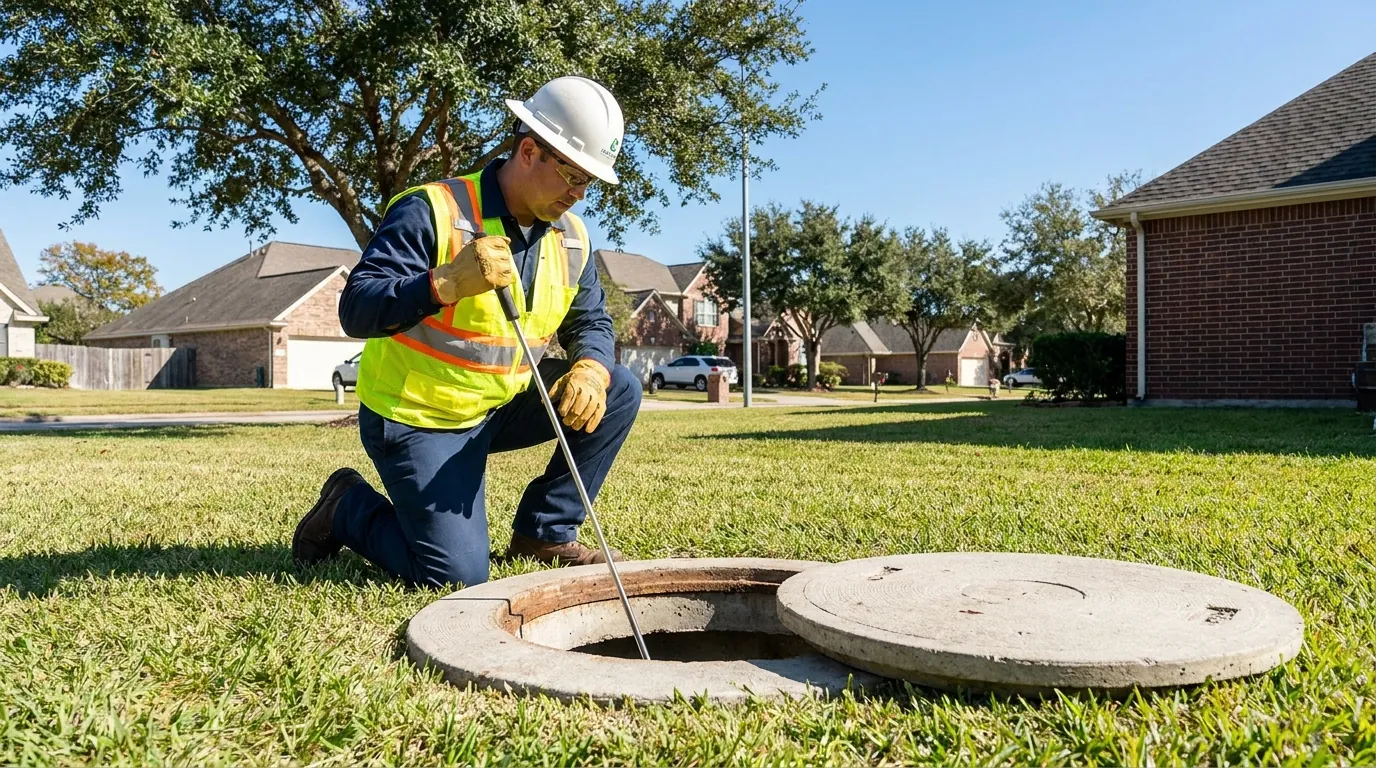
Septic system inspection in League City, TX. We check tank, baffles, liquid level, and drain field to find what needs repair before it becomes an emergency.
Why inspect the whole system
A septic system is more than a tank. It is a tank with compartments, inlet and outlet baffles, often an effluent filter, and a drain field where treated water soaks into the soil. Any one of those can fail while the others look fine, and the symptoms overlap. An inspection sorts out which part is the actual problem so you spend money on a septic system repair that fixes the cause, not a guess.
People book inspections for a few reasons: they are buying or selling a home, they have recurring slow drains, or a recent backup left them wanting to know how much life the system has. Whatever the reason, the goal is a clear picture of the tank's condition and whether the field is keeping up.
If the inspection turns up a full tank, a septic tank pumping is often the first step. If it points to the field, we cover that under drain field service.
What an inspection covers
A full inspection looks at the whole system, not just the lid.
-
System locate and records check
We locate the tank and, where available, review the layout so we know the tank size, number of compartments, and where the drain field lies.
-
Liquid level reading
The level in the tank tells a story. A level above the outlet suggests the drain field isn't draining; a low level can point to a leak in the tank itself.
-
Baffle and filter check
We inspect the inlet and outlet baffles and the effluent filter. Broken baffles let solids escape toward the field, and a clogged filter chokes flow — both common and both fixable.
-
Tank condition
With the tank pumped or partly drawn down, we look for cracks, corrosion, root intrusion, and signs of groundwater leaking in — a frequent issue where the water table is high.
-
Drain field evaluation
We check the ground over the field for saturation, odor, and ponding, which indicate whether the field is failing or simply overloaded.
What League City conditions reveal
The high water table along this stretch of the Gulf Coast makes one inspection finding especially common here: groundwater leaking into the tank. When the surrounding soil stays wet, water can seep through cracks and worn seams, filling the tank with clean water it was never meant to treat. That drives up pumping frequency and floods the drain field for no good reason, so we look for it carefully.
The clay soil shows itself too. Slow-draining clay means a marginal drain field can look fine in a dry month and fail after a storm. During an inspection we weigh what the ground has been through recently, because ponding right after heavy rain is different from ponding in dry weather — one is temporary overload, the other is field failure.
The result is a plain-language report: what is worn, what is failing, and what can wait. If a repair is needed, you will know whether it is a simple baffle replacement or something larger before it forces itself on you as an emergency.
Book a septic system inspection
Whether you are buying a home or chasing a recurring problem, an inspection gives you a clear answer on the system's condition.
Call to schedule a septic system inspection in League City and nearby towns.
Frequently asked questions
Do I need to pump the tank before an inspection?
Often the tank is pumped as part of the inspection, because an empty tank lets us see the baffles, walls, and floor clearly. If the goal is to assess buildup and sludge depth, we measure those before pumping so nothing is lost.
Can an inspection tell if my drain field is failing?
It can identify the strong signs — a liquid level above the outlet, soggy or ponding ground over the field, and persistent odor. Distinguishing true failure from temporary storm overload takes into account how much rain the yard has recently absorbed.
How is an inspection different from just a pump-out?
A pump-out empties the tank and includes a look inside. A full inspection adds liquid-level readings, baffle and filter checks, tank condition assessment, and a drain field evaluation, then ties it together into a report on the whole system.
Should I inspect before buying a house with a septic system?
Yes. An inspection before purchase tells you the tank's condition and whether the drain field is keeping up, so a failing system doesn't become your surprise expense after closing.