Septic Emergency Service in League City, TX
Septic emergency service in League City, TX. Backing up or overflowing? We relieve the system fast, then find the cause so it doesn't happen again.
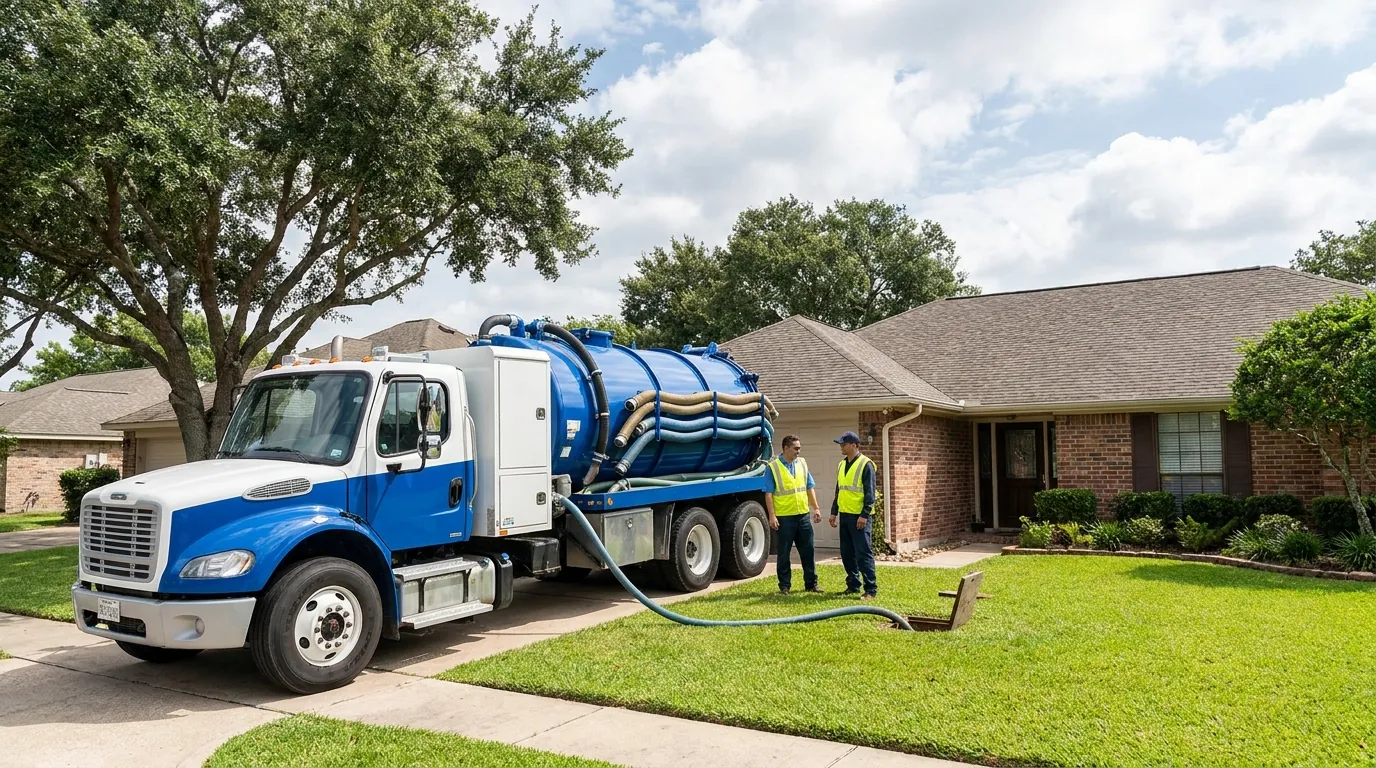
When it can't wait
Some septic problems are annoyances you schedule around. Others are emergencies: sewage backing up into tubs and floor drains, an overflowing tank, or a strong sewage smell filling the house. When that happens, the priority is relieving the system before more damage is done, then figuring out what triggered it.
Backups often peak during the region's heavy storms, when a rising water table floods the drain field and the whole system loses its ability to drain. They can also come from a tank that quietly went overdue and finally overflowed. The symptoms look the same from inside the house, so the response starts by relieving pressure and then diagnosing.
Once the crisis is handled, the cause dictates the fix — a septic tank pumping if the tank was overdue, or drain field service if the field is the bottleneck. A follow-up septic system inspection helps confirm nothing else is failing.
What to do — and what we do
A few steps on your end limit the damage before help arrives.
-
Stop adding water
Stop running water, laundry, and dishwashers immediately. Every gallon you send down makes a backup worse, so easing the load buys time until the system can be relieved.
-
Keep people and pets away
Treat backed-up sewage as a health hazard. Keep everyone clear of the affected area and avoid contact until it's cleaned up properly.
-
We locate and relieve the system
On arrival we find the tank and pump it down to stop the overflow, which relieves pressure on the whole system and usually halts the backup.
-
We find the underlying cause
With the immediate crisis handled, we determine whether the trigger was an overdue tank, a blockage, or a stressed drain field — because the fix differs for each.
-
We lay out the repair path
We explain what caused the emergency and what it takes to keep it from recurring, whether that's a schedule change, a repair, or drain field work.
Why emergencies spike after storms here
League City's combination of clay soil and a high water table leaves septic systems with little margin, and the region's sudden storms take that margin away. When heavy rain saturates the ground and lifts the water table above the drain field, the field can't accept any more water, so wastewater has nowhere to go but back toward the house.
That is why local backups cluster around wet spells. A system that ran fine all summer can overflow during a single strong storm, especially if the tank was already near due for service. Homes on low-lying lots feel it first.
The best defense is staying ahead of it — keeping the tank pumped so it isn't near capacity when a storm hits, and easing water use during heavy rain. When an emergency does strike, relieving the system quickly limits the damage and the cleanup. If storm-season risk is a worry for your property, our notes on septic care during heavy rain explain how to reduce it.
Dealing with a backup right now?
Stop running water and call. We'll relieve the system as quickly as we can and then get to the cause.
Call for septic emergency service in League City and nearby towns.
Frequently asked questions
What should I do the moment sewage backs up?
Stop running all water — no laundry, dishes, or showers — because every gallon makes the backup worse. Keep people and pets away from the affected area since backed-up sewage is a health hazard, and call for service to relieve the system.
Why do backups happen during storms?
Heavy rain saturates the ground and raises the water table, sometimes above the drain field, so the field can't accept wastewater and it backs up toward the house. A tank that was already near due for service is especially vulnerable during a storm.
Will pumping the tank fix the emergency?
Pumping usually stops the immediate overflow by relieving pressure on the system. Whether it's a lasting fix depends on the cause — an overdue tank is solved by pumping, but a failing drain field needs further work to keep it from recurring.
How can I avoid the next emergency?
Keep the tank pumped on a regular schedule so it isn't near capacity when a storm hits, fix leaks that let groundwater into the tank, and ease water use during heavy rain. Staying ahead of buildup is what prevents most surprise backups.