Drain Field Service in League City, TX
Drain field service in League City, TX. We confirm the real cause of a soggy or failing field before recommending a fix — starting with the cheapest options.
When the drain field is the problem
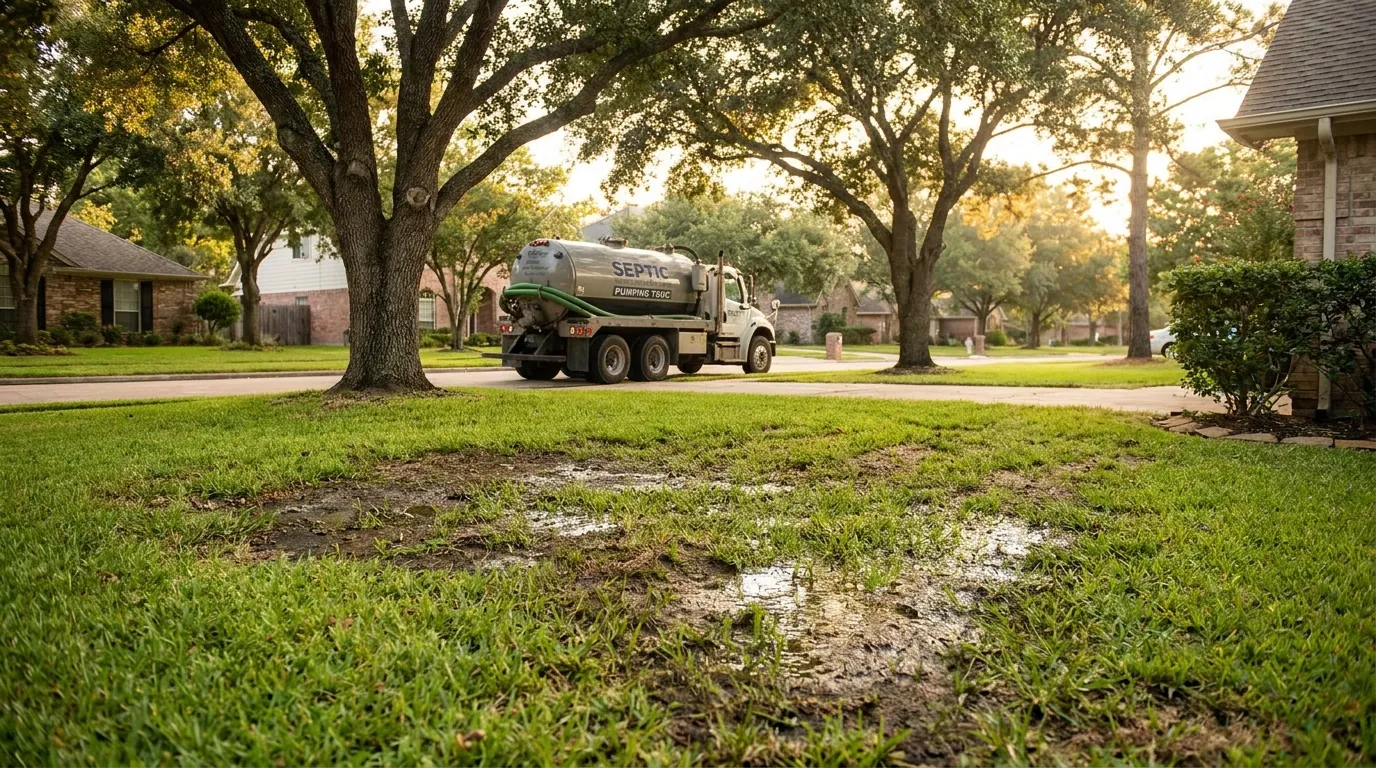
The drain field is where liquid leaving the tank soaks into the soil. When it stops absorbing, water backs up — you see soggy ground, standing water, bright green strips of grass, or smell sewage in the yard. Because those symptoms overlap with a full tank, the first job is to find out whether the field is truly failing or just carrying too much load.
This matters because a drain field is the most costly part of a septic system to replace. Rushing to that conclusion is expensive, and often unnecessary. Frequently what looks like field failure is an overdue tank pushing solids into the field, and a septic tank pumping plus a septic tank cleaning buys the field years of life.
So we diagnose before we recommend. If a simpler fix upstream solves it, that is where we start.
What drain field service involves
Service starts with finding the real cause before deciding on a fix.
-
Confirm the source
We first rule out a full tank, because an overdue tank pushes solids into the field and mimics field failure. Sometimes a simple pump-out and cleaning solves what looked like a field problem.
-
Assess saturation and ponding
We check the field for standing water, odor, and how quickly the ground accepts flow, distinguishing storm-driven wetness from true failure.
-
Inspect the distribution components
We look at the distribution box and lines where accessible, since a clogged or uneven distribution box can overload one part of the field.
-
Reduce the load
Where the field is stressed but not destroyed, we advise on cutting hydraulic load and clearing solids so the soil can recover between wet periods.
-
Plan next steps
If the field can't be recovered, we explain what restoration or replacement would involve so you can plan rather than face an emergency.
Why drain fields struggle here
League City's expansive clay is the single biggest reason drain fields here run close to their limit. Clay percolates slowly, so a field has little spare capacity to begin with. Add a high water table and the soil around the trenches is often already near saturation before a single gallon leaves the tank.
Then the storms arrive. The region's sudden, heavy rain floods the ground over the field and lifts the water table, sometimes above the trenches themselves. During those spells even a healthy field can't absorb, and a marginal one backs up into the house. That is why we separate storm-driven ponding from ongoing failure — the timing relative to rainfall tells us a lot.
The practical takeaway for local homeowners is that protecting the field means keeping solids out of it and keeping unnecessary water off it. Regular pumping, fixing leaks that let groundwater into the tank, and spreading out heavy water use all extend a field's life on this soil. Our notes on septic care during heavy rain go into the wet-season side of that.
Get your drain field assessed
If your yard is soggy over the field or you smell sewage outside, let us find the real cause before it becomes an emergency.
Call for drain field service in League City and nearby towns.
Frequently asked questions
Does a soggy yard always mean the drain field is failing?
No. It can, but the same symptom often comes from an overdue tank pushing solids into the field or from a temporary storm overload. We rule out the cheaper causes first, because a field replacement is the most expensive fix on a septic system.
Can a failing drain field be saved?
Sometimes. A field that is stressed but not destroyed can recover when you cut the load and clear the solids reaching it. A field that has fully clogged the soil around the trenches usually needs restoration or replacement, and we'll tell you plainly which one you're looking at.
Why does my field back up only after heavy rain?
During heavy rain the ground saturates and the water table rises, sometimes above the trenches, so the field temporarily can't absorb. A field that only struggles during storms may be marginal rather than failed, and reducing water use during wet spells helps.
How do I protect my drain field?
Keep solids out of it with regular tank pumping and cleaning, fix any leaks letting groundwater into the tank, and avoid dumping large volumes of water at once. On League City's clay, keeping the load light is what buys a field extra years.