Grease Trap Pumping in League City, TX
Grease trap pumping in League City, TX for restaurants and kitchens. We fully empty the trap, scrape the buildup, check the baffles, and haul the waste.
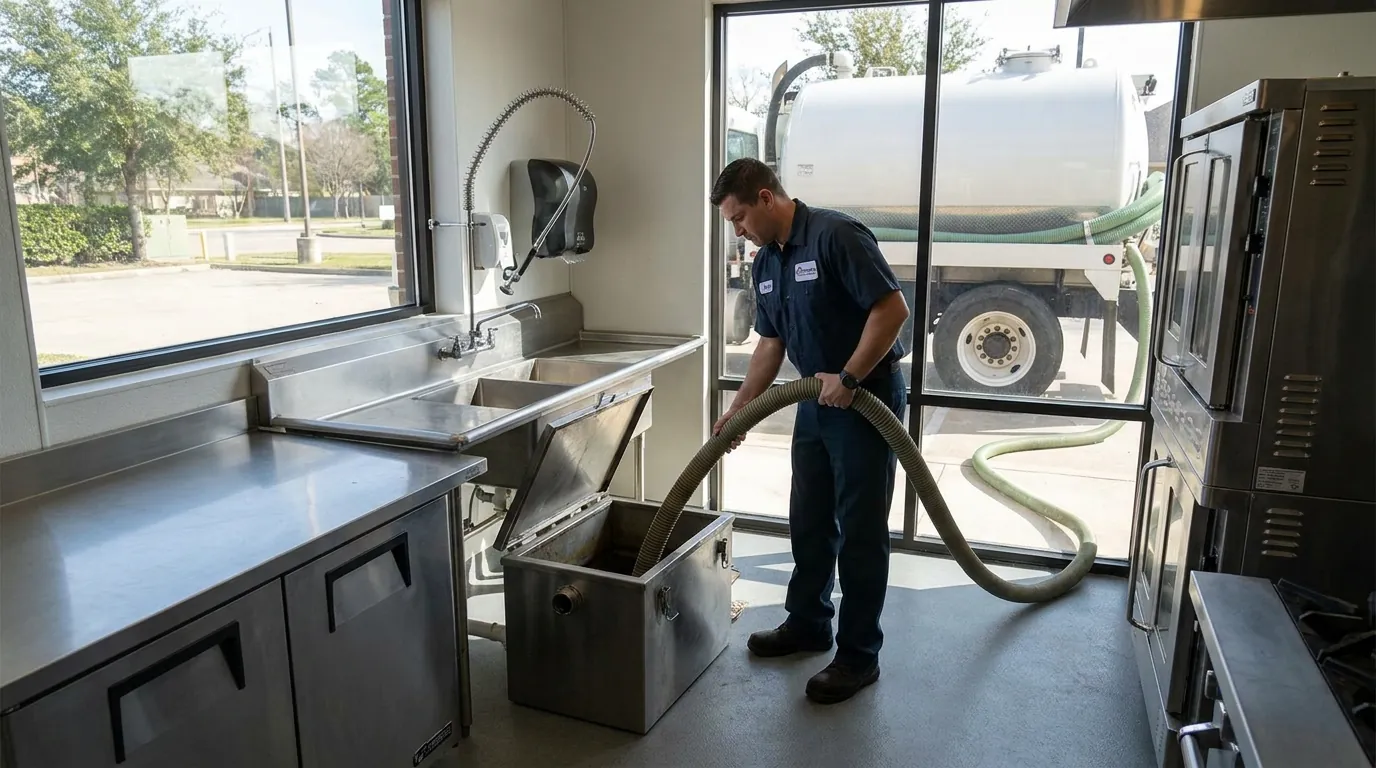
Why grease traps need regular service
A grease trap slows wastewater long enough for fats, oils, and grease to cool and float while heavier solids sink, so only cleaner water passes into your plumbing. Over time the floating grease cap and the settled solids grow until the trap can no longer separate — and grease starts moving into the lines, where it hardens and clogs. Regular pumping keeps the trap doing its job.
For a working kitchen, the cost of skipping service isn't just a smell. It's backed-up drains during service hours, foul odors in the dining area, and the risk of grease reaching the municipal system. The right interval depends on how much your kitchen produces, which is why we measure the layers rather than guess.
Grease trap work is separate from residential septic, but the principle is the same one behind septic tank pumping: remove the buildup on a schedule before it forces an emergency. If a backup has already started, that becomes a septic emergency service call.
What grease trap pumping involves
Service clears the trap completely and checks it's ready to work again.
-
Open and assess
We open the trap and measure the grease cap and solids layer to gauge how full it is and confirm the right service interval for your kitchen's volume.
-
Pump out completely
We remove the full contents — grease cap, wastewater, and settled solids — so the trap is emptied rather than just skimmed.
-
Scrape and clean surfaces
We scrape hardened grease off the walls and baffles, which a simple pump leaves behind and which otherwise builds into a chronic clog.
-
Check baffles and flow
We inspect the baffles and inlet and outlet so the trap will properly separate grease again once it's back in service.
-
Manifest the waste
The collected grease is hauled and disposed of through proper channels, and we leave you documentation for your records.
Local factors for League City kitchens
League City's warm climate keeps grease traps active year-round. Higher ambient temperatures slow grease from solidifying at the trap but do nothing to stop the buildup — the fats still accumulate, and the warmth encourages odor if a trap sits too long between services. Busy kitchens near the Webster and Seabrook corridors tend to need more frequent pumping than they expect.
Because this stretch of the Gulf Coast drains slowly and sits low, any grease that escapes a neglected trap has a harder path through the municipal lines, so keeping traps on a tight schedule matters more here than in a fast-draining region. Consistent service protects both your kitchen and the system it discharges into.
We set an interval based on your measured buildup and volume, then keep it steady so you never discover the problem mid-service. If your usage changes seasonally, we adjust.
Keep your grease trap on schedule
Tell us your kitchen's size and how often the trap is currently serviced, and we'll recommend a realistic interval.
Call to arrange grease trap pumping in League City and nearby towns.
Frequently asked questions
How often should a grease trap be pumped?
It depends on the size of the trap and how much grease your kitchen produces. Rather than apply a generic rule, we measure the grease cap and solids layer at service and set an interval that keeps the trap well below the point where grease escapes into the lines.
What happens if I skip grease trap service?
The grease cap and solids grow until the trap stops separating, and grease begins passing into your plumbing where it hardens and clogs. That leads to backed-up drains during service hours and odors, and can send grease into the municipal system.
Do you scrape the trap or just pump it?
Both. Pumping removes the contents, but hardened grease clings to the walls and baffles and rebuilds quickly if left. We scrape those surfaces so the trap starts clean and lasts closer to its full interval.
What happens to the waste after it's pumped?
The collected grease and solids are hauled and disposed of through proper channels, and we leave you documentation of the service for your records.